Want a team where people work together, “all for one and one for all”? Then here’s a practical recommendation.
Make a habit of using we-talk.
When you talk about the team, with the team or outside it, use words that demonstrate your commitment to the team, and encourage others to do the same. Use the word we, and mean it.
Here are some examples:
We have some great opportunities to…
Together we can…
How can we solve this together?
What are the next steps we should take?
This is what I will do for us…
What did we learn….?
What could we do differently next time?
We-talk builds connections, it highlights that you are a team and that you’re all there for each other. It shows that you need each other (everyone is important) and it creates a sense of belonging. It removes barriers and it creates team spirit.
Saying “we” – and meaning it – may seem like a small thing, but it can have a BIG impact on the team.
In high-performing, winning teams (in sports and in business) the team goes before the individual and as a result the team can achieve greater results and success, which ultimately also means the individual has greater success. It’s a win-win mentality.
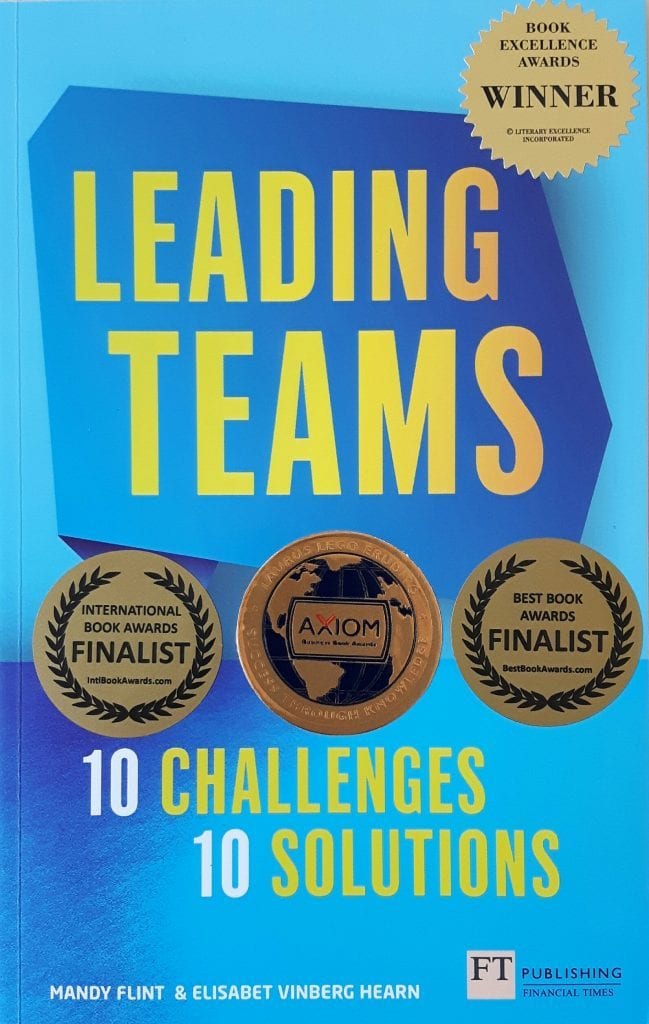
This is a revised excerpt from our award-winning book “Leading Teams: 10 Challenges 10 Solutions”, FT Publishing 2015.
Available in three languages – English, Spanish and Vietnamese.
The COVID-19 outbreak quickly changed the reality for people all around the world. The speed by which the virus spread, led to governments around the world deploying different strategies to stop or at least slow down the virus spreading.
For leaders all around the world, this has introduced new challenges, whether that would be a complete shutdown of businesses to people being required to work from home.
When we asked 104 leaders from around the world what they found the most challenging in their role during this pandemic, they said:
Balancing the short term crisis with the long term strategy
Almost two thirds (64.4%) responded that this is their no 1 leadership challenge right now.
Let’s break down this challenge and look at the two competing focus areas, before diving into some solutions:
The short term crisis
There have been (and continue to be) many short term issues that have had to be resolved; setting up teams for remote working, furloughing employees, dealing with the stress and uncertainty for team members, reassuring customers, taking care of business property and many more.
The short term issues tend to be something that can bring people together, rallying the forces to overcome the obstacles – it can boost morale and deepen the team spirit. It also tends to be practical and tangible and therefore relatively straightforward to get on with.
It allows people to focus on one thing, the next steps, giving them a sense of control and progress.
The long term strategy
Any focus on the long term on the other hand, is often put on the back-burner, which is of course perfectly understandable (you wouldn’t stop and take a phone call if the house was on fire – you’d put out the fire).
At the same time the long-term gives you direction and when focusing on it, pulls you towards it. It gives a sense of purpose and it brings order to chaos. And it can give greater meaning to the actions and reactions of short-term crisis.
When we focus on the long term strategy, we are having the foresight to do what’s needed now to deliver in the future.
Someone is sitting under a tree today because someone planted a tree a long time ago.
Warren Buffett
Solutions for how to balance the two
Here’s some food for thought, some practical ideas for how to balance the short term crisis with the long term strategy:
Make a risk assessment – what will happen if you don’t balance the two as needed? Be honest with yourself, and create a plan forward based on your assessment.
Realign roles and responsibilities. Assess what you and your team need to spend your time on and re-plan your time accordingly. Consider for example whether some will focus on the crisis management while some will focus on the long term strategy. Or should everyone do a bit of both?
Block time in your own calendar each week for a strategic review. If you don’t do this it’s easy that ‘putting out fires’ take up all your time – and almost becomes your ‘reason for being’, which adds further focus on ‘firefighting’.
Talk to your teamabout the long-term strategy. Intentionally bring it into the conversations you are already having, for a sense of purpose, direction and sense-meaning. Clearly link it to what the team is doing now.
Develop and use your systems (strategy) thinking so that you can talk to your team about how the crisis and the long term interact and how decisions now impact the strategy.
Talk with your leadership peers and your leader about how to get the balance right. Decide on approach and how to hold each other accountable, recognizing that you are role models for how the organisation will deal with this.
Explore if the long-term strategy may be changing as a result of the crisis. And consider how that may impact your approach.
Recognise when people get the balance right by highlighting it to others, hence encouraging others to do the same.
Remember that you are a role model in this – your team will mimic what you do. So, ask yourself – how are you balancing the short-term crisis and the long-term strategy at the moment? What else do you need to do?
It would be really interesting to hear what you think – what are you doing to balance the two? What has worked for you?
Samuel was in a bad mood, his wife this morning had really annoyed him by being so negative about her new job, she seemed miserable and downbeat, she was complaining that everything was wrong. Samuel had tried to help her see that is wasn’t but it hadn’t done any good. He was frustrated with her being so despondent when she had no reason to.
On his way into the office he was reflecting on this and he was feeling pretty despondent himself. He walked into his office, head down with a grumpy look on his face, his shoulders were slumped. It was obvious he was not in a good place.
One of his direct reports came towards his office and saw his demeanour. I am not going in there, she thought. Samuel barked an order for her to come in and discuss a report with him.
She came out of his office a while later feeling despondent, she swept out of his office ready to spread the word that Samuel was in a foul mood today.
What this short story from “The Leader’s Guide to Impact” reminds us of is that we always have an impact on people and the world around us, whether we pay attention to it or not. What’s going on on the inside, tends to ‘leak’ and affect those around us. Yes, our moods are contagious.
We can all have bad days, but we can also decide to make it as good a day as we can, by consciously choosing our outlook and the mood we want to spread to those around us. Before walking into work, we can take a moment and decide: how do I want to think and feel, what do I want to create in others as they encounter me?
Ultimately, we are all responsible for the impact we have and the impact we want to have. What mood do you choose to make contagious today?
In every day, there are 1,440 minutes.
That means we have 1,440 daily opportunities to make a positive impact.
Being kind comes naturally. It’s in our human nature to want good things for others, to want others to be happy, to succeed and prosper.
As a leader right now in this global pandemic and unrest, it’s a necessity to let that natural kindness come to the forefront of how we show up as leaders. We are not always aware of what others are feeling good about or what they are struggling with.
Here are 5 powerful leadership acts of kindness to practice every day – with employees, peers, people more senior than you and all other stakeholders:
Be 100% present. When you’re with someone – in real life or remotely – show them that they have your full attention and that you value them enough to not let yourself be distracted by buzzing phones or pinging emails.
Listen without prejudice. Don’t assume that you know what someone is thinking or what they will say. Be curious about their opinion. Listen first, then respond. Ask the right questions.
Be supportive. Are you seeing someone struggling? Emotionally or work related. Reach out, support, offer your help, your guidance or simply your ear. Be prepared for any response and allow that to be ok.
Notice when someone does something good. Praise them, thank them, recognise them publicly if relevant. Cheer someone on for their effort, dedication, creativity and results. We have the power to increase the number of positive messages around us and that creates a ripple affect. We need it in these challenging times.
Be honest. Kind honesty is sharing your observations on what someone is doing very well (so they can do more of it) and also what they could do more effectively (where they’re not having the impact they want or need). Feedforward is caring enough to be honest – always in a supportive way that makes the person feel you always have their best interest in mind.
“Do things for people not because of who they are or what they do in return, but because of who you are.”
A version of this article was first published in the Indian Management magazine.
Stephen walked through the turnstiles for the first time since being appointed the new Chief Operating Officer.
He was filled with energy and pride, having finally secured the senior position he had so coveted. This had been a long process, as all senior appointments are. He had waited for this day for 6 months. He had no history in the organization and had been given a blank canvas for his role.
Sophia met him and showed him to his desk. Desk?! Stephen swivelled around, eyes darting to try to locate his office. There wasn’t one, he realized. Before he could say anything, he was quickly whisked off to a meeting with the rest of the Executive team, in an opaque glass fronted conference room. His new career chapter started and before he knew it, it was time for lunch and his first moment to reflect on his new reality.
Why don’t I have an office? How will this work? How will people know I’m senior? I need to show my authority and get myself an office!
Stephen didn’t get an office. The CEO had a firm policy that none of the executives would have an office, as Stephen realised when talking to a few of his peers. Stephen was surprised and initially perplexed, and ultimately it forced him to think differently about his impact as COO. His impact would depend on his executive presence rather than the visual statement of power that comes with an office.
In this example we can observe that the impact you have as leaders is not through position alone but even more about how you behave. You don’t have to have an office to have an impact.
Given that impact is so important, you need to challenge yourself to become aware of the impact you have or maybe lack. Day by day, minute by minute, action by action, your behaviours create the culture you and your team(s) operate within. What culture are you creating today? It starts with you and the ripple effect that you have. Your behaviour as a leader is magnified into the organization. It’s like a big magnifying glass so if you don’t like something that is happening in your organization then hold up the mirror to yourself – and reflect on how you have been a part in creating that. And if you do like something that is happening then chances are you are creating that too, so be proud.
You may have a lot of strategies, for the business, for change initiatives and more, but you also need to have a strategy for your impact and therefore what that will do for the business. You can’t depend on symbols of power, such as a corner office, to make you impactful. You need to take control of your personal impact.
What all leaders have in common is that they always operate through others, they need to enable employees to do a great job. This is why your impact becomes your most important strategy in order to deliver the desired and expected results.
Your impact is and should be bigger than you. And as a senior leader in particular, it’s not about raising your own profile, your focus on impact is for the good of the business, the greater good. Consistent and/or powerful impact creates your legacy, what the history books would say about you. What you become known for. Your legacy is also your personal brand. What do you want to be known for? What legacy do you choose? When you move on to the next role, what do you want to be remembered for?
Leadership impact has always been important but often more of a subconscious occurrence than a focused effort. The awareness of its importance has grown over time, hence also the need to, at a minimum, manage or ideally even create the impact you WANT to have rather than just accepting the impact you naturally have.
Be more intentional about the impact you are having!
If you are a senior leader, your impact is also greater. You set the pace for your organisation. You need to be intentional about your impact – you need to lead and role model the kind of impact behaviours the organisation, its people, its customers and all other stakeholders need.
Many people find the whole idea of creating impact challenging as it somehow seems false or conceited to them to create impact, they may therefore be reluctant to do something with this. This is particularly true for leaders in the early stages of their career. If you’re a more senior leader, this concept should and needs to be at the forefront of your mind and something you should be comfortable with. Recognise that creating impact is a positive, powerful and respectful commitment to excellence – and that you always need to do this in an authentic way, a way that suits you.
Reputation and Brand matters in all leadership positions and it’s important for leaders to understand and work with that. Whatever leadership role you’re in, it’s your duty to ensure you have a strategy for your impact, that you can be in control of. You are never guaranteed the office, the car or any other visual proof of positional power, but the impact you choose through how you act and behave is entirely yours to choose and control.
Things move fast, we’re all surrounded by constant change. Leaders need to create impact in the moment, to not lose the power of that moment. No one is perfect and no one will get it right all the time, but they need to at least seize their most important moments and create the impact that will help them connect with others in a respectful way, to create trust, get others to listen to them, to influence effectively and to drive results.
Focus on both the “what” and the “how”
Our ability to have a good or even great impact is becoming more and more important. We all need to think about the effect we have on others and what effect we want to have. ”How” we operate rather than simply ”what” we do is becoming more and more critical to success. It’s all about how we impact people, the business and the world around us. In fact, it is fast becoming the differentiating factor for successful executives, leaders and organisations overall, something that we observe every day in our work. We all need to pay attention to how we want “to be” as well as what we want “to do”. The more senior you become the more thinking about how you want “to be” rises to the top.
We all need to manage our personal impact, and the effect our impact has on all our stakeholders, both in the short- and the long-term.
Having impact when the clock is ticking
Leaders are often brought in to an organization or are reassigned to a specific division or region to make a difference within a given timeframe. Some common examples of that are:
A CEO is appointed to turn around a failing business
A CEO is appointed to lead the organization through an aggressive growth strategy through mergers & acquisitions
A leader is asked to implement a specific change to how the organisation is working
An interim leader is asked to keep the organization afloat while a new permanent leader is identified and hired
Whatever the reasons are for the finite timeframe, any specific deadline brings about an extra need for putting an impact plan in place, where the leader ask her/himself: How can I maximise my impact to deliver as expected within the timeframe (even if I don’t have a corner office!)?
Chief Enabling Officer
A leader has a responsibility to the people they lead; to add value to them, to be of service to them. In fact, the title CEO may well stand for Chief Enabling Officer in addition to the more commonly used Chief Executive Officer. And If we extend that to all leaders, they are also in the business of enabling their employees and teams. And what better way to enable people than role modelling the behaviours that shape an organizational culture that can flourish into the future?
Here are some examples of Impactful behaviours to consider for your Impact Strategy:
Listening without prejudice
Communicating with passion
Taking a genuine interest in other people
Seeing the bigger picture and being able to share it in an clear way
Generously sharing knowledge and insights
Showing trust in others
Communicating openly, honestly and respectfully
Yes, your behaviours are critical to your success, so think about what behaviours you want to be demonstrating and role modelling to others. Your personal impact can be much more powerful than any corner office could ever be.
Things move fast. Leaders need to create impact in each moment, to not lose that moment.
Creating impact is a positive, powerful and authentic way to demonstrate you’re taking charge, get more from your team and drive business results. But to succeed, you need to create the impact you WANT and need rather than relying on what you HAVE.
The Leader’s Guide to Impact will show leaders how to create the impact that will help them connect with others in a respectful way, to create trust, get others to listen to them, influence effectively, drive results and much more. And most importantly, the book will also show leaders how to do it in an authentic way that supports your reputation and brand effectively.
Managing and creating impact is not a “nice to have”, it’s a business necessity.
Most of us work in or manage teams, but are we really getting the most out of the numerous benefits of effective teamwork? All too often there are roadblocks – ranging from a lack of engagement to clashing personalities – that are holding us back from achieving the results we need.
Leading Teams shows team leaders how to overcome the most common obstacles to team performance and drive outstanding results from their people.
The Team Formula: A Leadership Tale of a Team who found their Way
Written in the format of a novel, it tells the story of an international team and its struggling leader following a merger. The recognition factor is high for readers from all industries!
This is a quick, must-read for leaders and team members in any organisation. The book offers a fun, engaging and informative experience, providing opportunities for reflection as well as valuable ideas that can be implemented immediately. The story tempts the reader, to look at him/herself and ask the questions: What choices am I making? How does this apply to me and my team? What am I doing to make this team work?