
Time is not refundable so use it with intention

From WeAreTheCity’s Future Leader’s Blog


“Where did that time go, I can’t believe the first quarter has gone already, can you?”

“I know I saw you in January and it is already April, how did we get to Easter so fast!”

“Is it really 2017 it seems like yesterday when I was saying welcome to 2015”

These phrases sound familiar to you? Everyone we talk to says things like this about time.

Everyone is so busy. With the busy bug people don’t feel like they have a choice, like time is just running away.

With the busy bug people don’t feel like they have a choice, but we all have choices

There are many pressures on us to be busy; there is so much to do, there is the pressure of work, home, family, getting the balance right in our life.

The next job, the next promotion, the next meeting we HAVE to go to, the flight we have to take, the next thing we cannot miss. We get into the busy wheel and it feels like we can’t get off.We feel like we HAVE to, OUGHT to or SHOULD do. There are demands on our time from every angle.

It can feel like we are missing life and great moments when we are in the busy bug mode.

“The bad news is time flies. The good news is you’re the pilot”

Michael Altshuler.

Here are some of our recommendations for how to take the steering wheel when we are busy ‘running’:-

  • Take one step at a time, ensure you stay in the moment. Just take one moment to stop and think. Just one moment to take that breath before you open the door to the meeting or dial into that conference call.
  • Review how much reflection time you are getting, how much downtime to reflect on what has just happened or prepare for that next meeting or next place you have to be.
  • Have you just missed a moment to thank someone, recognise someone or celebrate success? Take that time write that email, say thanks, acknowledge what you have just done before rushing onto the next thing you must do.
  • Be intentional about how you spend your time. Choose to do things you want to do too, not just the things you feel you have to do.

Life is very full for all of us no matter what we do, but life has space too. Grab that space.

Make the most of it as time is not refundable. Enjoy the moment!


About the authors

Mandy Flint & Elisabet Vinberg Hearn, award-winning authors of ”The Team Formula”.

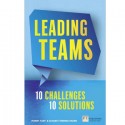
Their latest book, multi-award-winning “Leading Teams – 10 Challenges: 10 Solutions”, published by Financial Times International is a practical tool for building winning teams. You can download a free chapter of the book at www.leadingteamsbook.com

Praise for ”Leading Teams: ”Enjoyable to read. Simple to understand. Practical to implement. A must read for team members or leadersDebbie Fogel-Monnissen, Executive Vice President, International Markets Finance Officer, Mastercard, NY, USA.

The art of making people feel special

From WeAreTheCity’s Future Leader’s Blog


“Wow, that’s a really interesting idea!” Steve looked attentively at Sally.

“I had never thought about that. What made you consider it?”

Sally lit up. “Well, I’ve thought about it for a while and have discussed it with my colleagues recently who also thought the idea had real potential. I’m glad you liked it, do you want to hear some more on how I think it could work in practice?


Steve nodded. “Yes please, that would be really helpful.”

This very short story points at the art of making people feel special.

Because, just like in this conversation, isn’t it wonderful when someone really sees you, hears you, takes interest in what you think, appreciates your input, values your contribution? Simply put, isn’t it great when someone makes you feel special? Of course it is.

We have all been given the ability to make other people feel special.

It’s pretty cool.

We have all been given the ability to make other people feel that way.

And what happens when we do is pretty special – it engages, it makes others want to put that extra effort in, it makes people want to help and support. It’s pretty cool.

Here are some of our key recommendations on how to do it:

  • Be genuinely interested in the other person. Be curious about them. Recognise that everyone has something very unique to contribute (their experience, ideas, knowledge etc)
  • Be 100% present, don’t glance at your phone, don’t think about your next meeting, but really give the person in front of you your full attention.
  • Confirm and praise their input, specifically. Recognise that they have made a unique and valuable contribution.
  • Use the word “and” instead of “but” if disagreeing with what they say. (Eg. “Great idea, and how would that work in practice?” instead of “Great idea, but I don’t think it would work.”) “And” builds bridges. “But” builds walls.

Go on, make someone feel special today!

About the authors

Mandy Flint & Elisabet Vinberg Hearn, award-winning authors of ”The Team Formula”.

Their latest book, multi-award-winning ”Leading Teams – 10 Challenges: 10 Solutions”, published by Financial Times International is a practical tool for building winning teams. You can download a free chapter of the book at www.leadingteamsbook.com

Praise for ”Leading Teams: ”Enjoyable to read. Simple to understand. Practical to implement. A must read for team members or leadersDebbie Fogel-Monnissen, Executive Vice President, International Markets Finance Officer, Mastercard, NY, USA

Don’t let it get to you!

From WeAreTheCity’s Future Leader’s Blog


Stress, pressure, uncertainty and disappointment.

These are some of the negative feelings and experiences we can encounter at work.

Sounds familiar? Been there? We probably all have.

But things around us are not the boss of us. We all decide how we will react to circumstances, situations and people around us. We can choose to not let it get to us. We can decide to be our own boss, meaning that we make our own decisions on how we will think and feel and consequently how we will react.


It’s completely within our own power to choose our response in the “moment of truth”

It’s completely within our own power to choose our response in the “moment of truth”, that split second in between when something happens (that could trigger us if we let it) and when we need to respond.

Choose wisely. Don’t be a victim to circumstances. Don’t let others push your buttons. Don’t let it get to you. Stay in control and decide for yourself. Look for the response that will make you feel most in control, most authentic while respectful to the situation. Just because someone else is stressed for example, you don’t have to be.

When we choose to be in control of our own responses and reactions, we truly become empowered and can more calmly look at the situation and start to find constructive solutions for it.

So don’t let the stresses and pressures get to you. Take a deep breath and trust that you can choose your response at any time. You are in charge, you decide.


About the authors

leading teamsMandy Flint & Elisabet Vinberg Hearn, award-winning authors of ”The Team Formula”.

Their latest book, multi-award-winning ”Leading Teams – 10 Challenges: 10 Solutions”, published by Financial Times International is a practical tool for building winning teams. You can download a free chapter of the book at www.leadingteamsbook.com

Praise for ”Leading Teams: ”Enjoyable to read. Simple to understand. Practical to implement. A must read for team members or leadersDebbie Fogel-Monnissen, Executive Vice President, International Markets Finance Officer, Mastercard, NY, USA.
How coachable are you?

From WeAreTheCity’s Future Leader’s Blog


The world isn’t standing still and neither should we.

The “facts” certainly change and we need to continuously re-learn; what we knew yesterday may no longer be correct. What we accepted as truths may since have been disproved. We need to be open and accepting to that.

We are sure you agree that we all need to adapt, change and evolve to meet the demands and expectations of the future.

This of course also means that we need to welcome feedback AND be able to take action to change and adapt our actions, behaviours and habits. Many people say that they are adaptable and flexible and even that they want to be coached, but when someone gives them constructive feedback that could help them develop, they brush it away or become defensive; they come up with excuses and explanations.

Simply put; they don’t take it in and therefore they don’t change. On some level it’s more important for them to be “right” than willing to develop. They are not open to the coaching opportunity of the feedback. And each time they reject the feedback, they reduce the chances of others wanting to share feedback in the future – hence minimising their chance to grow and develop and be successful.

Winners are coachable. It’s a simple as that

Winners are coachable. It’s a simple as that. Imagine a team in the sporting world where a player isn’t coachable, won’t take on feedback – well, they are pretty soon going to be off the team, aren’t they?

To be coachable is to let our guard down. We stand strong and open minded

To be coachable is to let our guard down. We stand strong and open minded, knowing that feedback and coaching is the stuff of winners, of champions. We assume positive intent. We are eager to keep doing better and better.

There are many coaches around us, people that can hold up a mirror and let us see what they see – and at times – give us guidance too: leaders, peers, direct reports, friends – and of course coaches.

Are you getting enough feedback? Are you letting yourself be coached? How coachable are you?


About the authors:

Mandy Flint & Elisabet Vinberg Hearn, award-winning authors of ”The Team Formula”.

Their latest book, multi-award-winning ”Leading Teams – 10 Challenges: 10 Solutions”, published by Financial Times International is a practical tool for building winning teams. You can download a free chapter of the book at www.leadingteamsbook.com

Praise for ”Leading Teams: ”Enjoyable to read. Simple to understand. Practical to implement. A must read for team members or leadersDebbie Fogel-Monnissen, Executive Vice President, International Markets Finance Officer, Mastercard, NY, USA

Can you see the invisible thread running through your team?

From WeAreTheCity’s Future Leader’s Blog


Can you see the invisible thread running through your team? Of course it’s not invisible, is it?
When you work in a team where you are excited, challenged and energised by being part of the team, that feeling doesnt happen by accident.

It is like there is an incredible connection between team members and things just work effortlessly and sometimes you almost don’t need to even talk to get things done. And that connection shows in behaviours and teamwork.

When there isn’t that invisble thread then you have to create a thread between team members, and sharing more is always a key to opening up the success you need to create as a team.

There are many reasons why team members don’t share knowledge or experience with each other, ranging from thinking in silos to fear of being ridiculed.

Duplication of workload is a common result when team members don’t share. When information, knowledge and experience are not shared it limits the intellectual capital of the team. The team will simply not perform at its optimal capacity.

Learning is negatively impacted too. When not sharing, you are taking away the other persons opportunity for learning and growth. The team’s growth is also affected.

Everyone expects and needs more openness and transparency, both within organisations and in the external world around us. It starts with us right here, right now, sharing more relevant information.

Here are a few ways to encourage your team members to share relevant information with each other.

  1. It starts with you!

People often think knowledge is power and hold on to it rather than give it away. If you want other people to share information, you need to be the one that kicks it off and show you’re not afraid to share, not afraid to give something away.

  1. Make people aware of the effect

Feedback is essential. Use it to encourage people, so they know that sharing was the right thing to do. Tell everyone ‘by sharing that information, this is what you get’. But also, point out when sharing might have helped – and didn’t happen – and do it in real time if possible. Everything is about learning.

  1. Celebrate successes

By celebrating success of sharing you’re highlighting how crucial the sharing has been to success. Then dissect it. Why did it work well? If it worked well, find out why it worked and do that again, adapting it to new situations too. The pace people work at now means we rarely take the time to stop and celebrate something done well because we’re on to the next job. But it’s worth it, to stop and reflect.

  1. Dare to share

This is the champion. This is about the fear involved – fear of losing face or saying the wrong thing or sharing too much. Something very powerful happens when people see someone else dare to share. Behaviour breeds behaviour, disclosure breeds disclosure.

So go ahead and fearlessly share what you know with team members for the benefit of everyone and create that invisible thread for your team.


About the authors

Mandy Flint & Elisabet Vinberg Hearn, award-winning authors of “The Team Formula”.

Their latest book, multi-award-winning “Leading Teams – 10 Challenges: 10 Solutions”, published by Financial Times International is a practical tool for building winning teams. You can download a free chapter of the book at www.leadingteamsbook.com

Praise for Leading Teams: “Enjoyable to read. Simple to understand. Practical to implement. A must read for team members or leaders” – Debbie Fogel-Monnissen, Executive Vice President, International Markets Finance Officer, Mastercard, NY, USA.

What happens when suddenly there is no leader?

From WeAreTheCity’s Future Leader’s Blog


When a leader suddenly resigns a leadership void is created.

This creates a lot of uncertainty and concern, as well as a potential drain on knowledge and experience, which an organisation needs.

In the leadership void, unless someone takes charge providing some much needed certainty and reassurance, dissidence and discontent can grow quickly and out of control.

Leadership void plan A

The very best scenario is of course to have a solid succession plan in place. In fact, any organisation should have such a plan – too much dependence on a single leader or a few leaders is irresponsible at best, grossly negligent at worst.

The most successful and powerful leaders are the ones with a good succession plan in place, who are also developing the next person to take over from them. They do this with pride.

The succession plan then needs to be supported by a strong set of shared values and a clear, healthy culture that helps everyone in the organisation to feel continuously supported and clear on direction and action regardless of a sudden disappearance of key leader figures.

With these two elements of the plan, the organisation (or country) shows all stakeholders that they are still in charge of the situation, that the organisation is still strong and that stakeholders can trust that their stake is not at risk.

The most successful and powerful leaders are the ones with a good succession plan in place, who are also developing the next person to take over from them.


Leadership void plan B

If there is no plan A when leaders leave, the organisation must move very quickly to restore calm, trust and a sense of certainty. All eyes are on them and every moment counts.

Here are some key steps to take for the most senior person that is left:

  • In these times of change the organization needs direction, it needs clear leadership saying “this is where we are going, this is the direction” and people need someone to take the lead.
  • Keep in mind that rumours are created in the communication void (very common when key leaders are no longer around). Don’t collude with that behaviour, if you see it or hear it, stop it. Don’t allow for that communication void to take place – communicate immediately to employees and other key stakeholders, letting them know that despite the leadership drain, it’s still business as usual – and that more information about leadership succession will follow as soon as possible.
  • Behaviours are important at this point. People look to the leader(s) and watch what behaviours they role model. It is a time to really think about how you are behaving, work out what are acceptable behaviours and what are unacceptable behaviours.

When people recognise that things will indeed be okay, you are creating a confident workforce to support you on the new journey forward.

Communication

The leadership void may not have been wanted, it may even be perceived as disastrous, but keep in mind that disaster is only a label for how you experience the situation. Only you remember it the way you remember it.

If it’s happened, it’s happened – it’s a fait accompli – and the only way forward is to actively look for the opportunities that arise as a result of it. Look for them, find them, engage people in the process and communicate like you’ve never done before: frequently, confidently, repeating that things will be okay.

When people recognise that things will indeed be okay, you are creating a confident workforce to support you on the new journey forward. Then go ahead and simply lead it from the front.


About the authors

Mandy Flint & Elisabet Vinberg Hearn, award-winning authors of “The Team Formula”.

Their latest book, multi-award-winning ”Leading Teams – 10 Challenges: 10 Solutions”, published by Financial Times International is a practical tool for building winning teams. You can download a free chapter of the book at www.leadingteamsbook.com

Praise for ”Leading Teams: ”Enjoyable to read. Simple to understand. Practical to implement. A must read for team members or leadersDebbie Fogel-Monnissen, Executive Vice President, International Markets Finance Officer, Mastercard, NY, USA