Over the last two blog posts we have explored the subject of Leadership impact, how Leadership = Impact = Culture as leadership is very contagious.
If you haven’t read them, check them out before you continue reading. Thanks!
This week we want to turn our attention to Executive Presence and how it plays a part of the impact you have.
Executive presence is a combination of behaviours, skills and style, and can sometimes be described as the ability to command a room (sometimes completely without saying or doing anything). Effective executive presence can look different in different leaders. Some exude it, regardless of what position they have. So what is it? How would you describe it? And how do you get it and develop it, if it’s not already there?
Exuding Executive Presence
We were recently in a situation with 50 leaders in a room where a senior leader was joining us, whom we had not previously met. As soon as she entered the room, we could tell it was her by the way she strode in, confidently, her eyes were scanning the room, smiling, nodding and acknowledging people’s presence, indicating that she had seen them and would get to them. She moved easily to her seat and started a conversation with the people at that table; interested, engaged. The way people reacted when she arrived, confirmed who she was to us. They turned their attention towards her, almost straightening their posture in their chairs, and clearly signaling that they knew she was there. Some were even getting up and walking up to her, extending a hand, hence demanding her attention. Others sat back but their radar was still on with regards to where she was. She became the focus of attention, whether she wanted it or not.
Even if she had not had executive presence, she would have attracted their attention because of her position. There’s always positional presence, dictated by the seniority of the role, but executive presence is about more than a title and hierarchy.
We are talking here about effective executive presence, needed to build relationships and long-term success. Many of us may have experienced not so positive executive presence, where leaders have used their position of power to dominate, instill fear and influence in a manipulative and negative way. In the story above, the senior leader could have had a very different response from people if she had stormed into the room, on her phone, still talking, acting all superior and only wanting to talk to the more senior people for example. It would have made people feel unimportant, not respected and not appreciated. Back in the workplace this would lead to you not wanting to go the extra mile for that leader, so productivity would be negatively affected. There would arguably have been some kind of executive presence but not of the kind that drives trust and sustainable collaborative followership. There’s nothing endearing about dictatorial leadership.
Consider executive presence and gravitas as a key factor to use in order to influence more and more effectively, particularly if you want to influence someone more senior than you. Even if you are not an executive, executive presence is something you will need to develop and use more as you progress your career.
We have been working with and studying leaders and their impact for 22 years and have identified five areas of Executive Presence, made up by a number of behaviours that represent that presence.
The Executive Presence Sweetspot™
Reflect on the five behavioural areas above and how often and consistently you think you display these today and which ones you need to be more intentional about living to deepen your impact and grow as a leader. Which area(s) do you think are most important for you to develop?
The most effective leaders are able to tap into each of these behavioural areas when needed, hence creating an Executive Sweetspot in the middle, where they can have the greatest positive impact.
Executive Presence is a great career builder, if used authentically. That’s when it’s experienced as something great by others, something that creates greater collaboration, more trust, more innovative solutions and better results.
Want to know more about the behaviours that make up the behavioural clusters above? And how to develop those behaviours? Check out chapter six of our new book “The Leader’s Guide to Impact”.
Do you remember the ‘Bad’ and the ‘Good’ Culture Shapers from last week’s Future Leaders’ post?
If not, check it out before you continue reading. Thanks!
The reason leaders are such major culture shapers is that leadership behaviours are contagious. A study by Zenger & Folkman where 51 leadership behaviours were tested for their contagiousness, showed that these are the most contagious behaviours, in order:
Developing self and others
Technical skills
Strategy skills
Consideration and cooperation
Integrity and honesty
Global perspective
Decisiveness
Results focus
Where do you think you are at with these behaviours? What behaviours would you like to make contagious where you work? What behaviours could you develop and display more to shape the kind of culture you want to embed in your team or organisation?
Culture is created through the experiences we spark in others. Some experiences are positive and some negative and it can be describe as making deposits in people’s “positive and negative bank accounts”. For a team to be effective, trustful and collaborative, people need to have 3,5 positive experiences for every 1 negative experience with their colleagues. What this means is that we need to create enough of those positive encounters to make up for the inevitable negatives – and we can probably all do this more; praise others, give credit where credit is due, listen with interest, and recognize strengths.
Next week, we’ll explore the concept that Leadership = Impact = Culture even more by asking the question what Executive Presence is and why it matters to you even if you’re not (yet) an executive.
Until then, have a great week – and more great impact!
Leadership is the act and art of influencing and impacting others.
This means everyone is a leader.
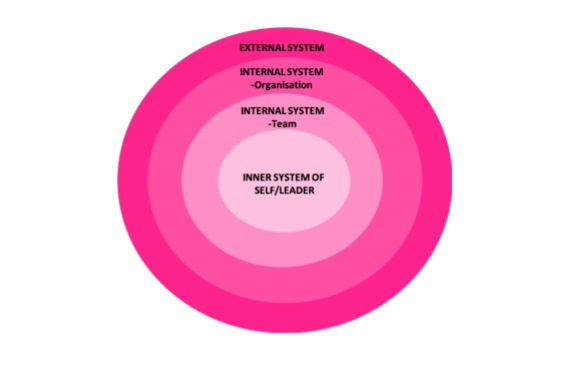
As the picture below shows, the impact you have starts from within. Powerful impact starts with self-leadership; how you think about yourself and how you see yourself becomes what you send out. And that in turn affects what others see and experience – from your team through the organisation and externally too. That’s the ripple effect you have.
You’re a culture shaper. Just like everyone else, you shape the culture of your workplace by what you do, but also by how you are, how you behave. As culture can be described as “how things get done around here”, it includes the daily interactions between people; how we act, react and respond to one another.
Leaders at all levels have a responsibility when it comes to the organisation’s culture, but the buck stops with the CEO and the senior leadership team. Everyone’s behaviours shape the culture, but the behaviours that are displayed by and accepted or even rewarded by leaders are the biggest culture shapers. They impact the culture the most.
The ‘Bad’ culture shaper
Imagine a CEO who speaks about the value of transparency and openness, but who goes behind his/her executives backs, sharing certain things only with his ‘trusted few’. The executives that experience this become cautious, thinking it’s not about transparency at all –
I’d better tread carefully around here from now on. These executives in turn become less transparent with their teams, who become disenchanted by the false behaviours (=not in line with the values) of their leaders. That is how leaders shape culture.
The ‘Good’ culture shaper
Imagine a company that says it values and respects people’s work/life balance. The leaders then reward and praise people who work smarter and within work hours, and who work together in teams to achieve. They are rewarding what they value not what they don’t value (they are not rewarding people who work long hours and sacrifice their personal lives. That is how leaders shape culture.
Culture should be on every board’s, executive team’s and leader’s agenda. Leaders at all levels set the tone for ‘how things get done’. Culture starts at the top but can’t just be dictated from the top. It needs to resonate with people at all levels, as something they would ‘stand for’ themselves.
So leaders who want to maximise the power that is culture, must look to themselves first: How am I behaving? What messages am I sending through my behaviours? What behaviours am I creating in others? And then start changing and adapting their behaviours, creating new habits if needed to create the kind of workplace culture you want to have.
This topic is what we talked about at last week’s WeAreFutureLeaders conference in London – a great event, which we were very happy to be part of!
Next week we’ll continue to explore the concept of how leadership = impact = culture.
In fact, a major factor for the survival of our species over time has been, and continues to be, our ability to connect with and collaborate with others.
So, building strong, collaborative, creatively challenging and trustful relationships could be the most important thing you ever focus on.
Who are the people you need to build strong relationships with?
How about:
Your peers
Your employees
Your boss
Your boss’ boss
Your customers
Your board of directors
Your business partners
Your suppliers
Your contractors
Your competitors
Politicians
Other decisions makers
And more…
Yes, the list is potentially long. But don’t let that scare or deter you.
To strategically and carefully consider your stakeholder is not an optional task – it’s one of the most important ones on your list. It’s only by connecting respectfully and genuinely that we can be successful – and we don’t mean successful in a selfish “just for me” kind of way. No, we mean successful in a bigger context, being able to make a difference to something bigger than ourselves; like solving someone’s problem or creating solutions that evolve for the benefit of others over time.
If you currently don’t spend enough time considering how to cultivate those important relationships, here are three steps to help you on your way:
Map out the people you impact and the people that impact you – your stakeholders
Reflect on what they need from you and what you need from them. Then build a plan for what you need to do to meet those needs. Specify how, when and where you will connect and interact with them.
Keep in mind that not all your stakeholders have equal importance, and that’s OK
It doesn’t mean that some people are less important or valuable, but let’s be honest and pragmatic – you won’t have time to give everyone equal attention (nor would you or they want it) so you will need to put more focus on those that have the biggest role in your work reality. Don’t just think short-term here, remember to build relationships for the future too – think long-term too.
Take a genuine interest in these key stakeholders; ask questions to understand them better, listen to them, take the time to create a real connection with them
Connect on the human level by being genuinely interested, not just in a transactional kind of way. Think about how you make them feel, what they experience when they interact with you – think about your impact.
Caring for and carefully managing your stakeholders will help you build the relationships that you are dependent on to enjoy your work as well as deliver great results over time. It’s a fun and meaningful part of everyone’s work and it’s never too soon or too late to start. What step can you take today to lay the foundation for those crucial relationships you need, not just today, but in the future?
“But bosses can pretty much do what they want, that’s what’s so sad”
These were the exact words said by a woman pacing up and down a deserted aisle in the supermarket one evening. She was on her mobile talking to what seemed to be a colleague, based on the contents of their conversation. I didn’t want to eavesdrop but those words spoke volumes about her state of mind and were hard not to hear.
There was a sense of resignation about her comment and her body language that really made me wonder what had happened, specifically. I couldn’t really hang around to listen, but I would have loved to hear more.
As I left the store, I reflected on the impact a leader can have – for better and for worse.
A leader’s responsibility is to lead and operate in such a way that his or her employees can better do their jobs. When leaders do that effectively, they include and involve the people in question rather than just “doing things their own way”.
You never know when a moment and a few sincere words can have an impact on a life Zig Ziglar
I don’t know what happened to the woman in the supermarket, or her boss, but I know that leaders that want to get results should pay heed to the impact they are having on people around them and include people all along the way. Otherwise they may end up with so much resistance that good results become impossible, and everyone loses out.
Leadership stripped bare is quite simple:
Share a vision, give direction (so people understand WHY)
Involve people in HOW to get there
See people (everyone wants to be seen and heard), see and understand the individual
Make use of each person’s unique strengths and possible contributions
Foster open communication. Never shoot the messenger – if things are going on, you are better off knowing about it!
Let go of the need to be right (no-one has all the answers anyway), keep an open mind and encourage others to do the same
Follow up and give feedback, so people know how they are doing and that what they are doing matters
And be genuine (find your own leadership style that suits you) while always being respectful
It’s not always easy to lead but taking control of your impact makes it easier. Think about how you make people feel. Choose the impact you want to have for the future.
About the authors
Mandy Flint & Elisabet Vinberg Hearn, award-winning authors of ”The Team Formula”.
Their latest book, multi-award-winning ”Leading Teams – 10 Challenges: 10 Solutions”, published by Financial Times International is a practical tool for building winning teams. You can download a free chapter of the book atwww.leadingteamsbook.com
Praise for ”Leading Teams: ”Leadership is about effective conversations. This book is a very useful ready reckoner for leaders everywhere seeking the words and methods needed each day at work.” Sanjay Gupta, CEO English Helper Inc, India.
Long-term thinking is a must in the business world. In this article for the CityJet Journal, Mandy Flint and Elisabet Vinberg Hearn explain why, and how you and your team/organisation can become more long-term focused.